Used by bodybuilders and athletes for a few years already. After resistance exercise, IGF-1 is released within the muscle. Specifically, at this time, immediately following the mechanical use of a muscle, the IGF-I gene is spliced towards MGF which initiates hypertrophy and repair of local muscle damage.
Storage
This product can be used not more than 3 years from the production date (see box).
After reconstitution, may be stored for a maximum of 14 days in a refrigerator at 2°C – 8°C.
Store vials in an upright position.
Store in a refrigerator (2°C – 8°C). Keep in the outer carton in order to protect from light.
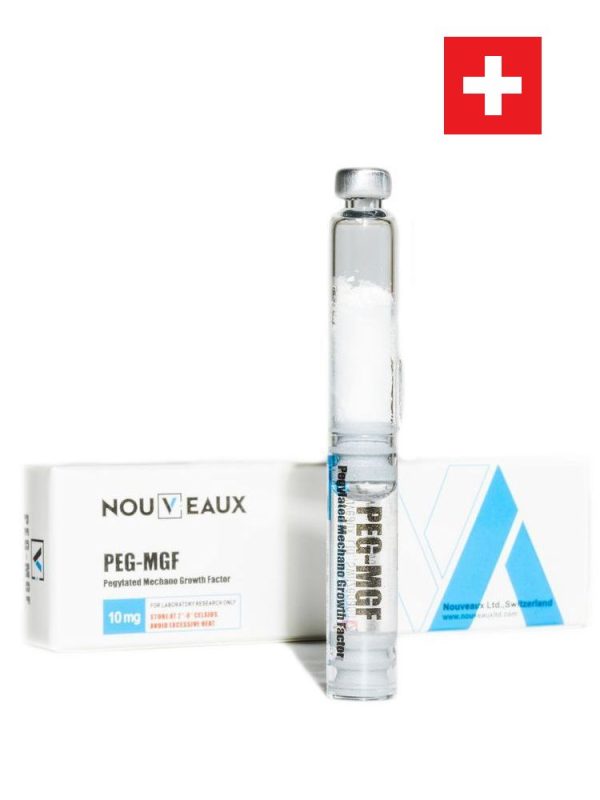
PEG-MGF, or Pegylated Mechano Growth Factor, is an experimental peptide related to the IGF-1 signaling pathway. It has been studied in connection with muscle response to mechanical stress, particularly following resistance exercise. Nouveaux Germany
Research focus: Muscle repair, growth signaling, and cellular responses to mechanical stress.
Mechanism: MGF is associated with alternative processing of the IGF-1 gene following mechanical stimulation of muscle tissue.
Muscle research: Studies have investigated its potential role in activating satellite cells and other pathways involved in muscle repair and adaptation.
Structure: PEG-MGF differs from conventional IGF-1 primarily through differences in its peptide sequence and pegylation.
Research status: Evidence for PEG-MGF’s effects in humans remains limited, and it should not be presented as an established muscle-building treatment.
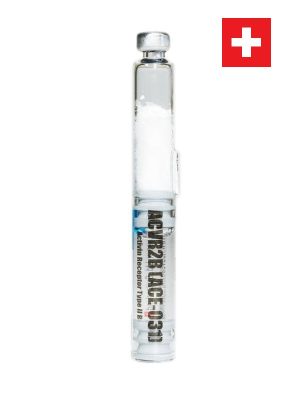
Physical form: Often supplied as a white, lyophilized powder for laboratory research.
Important: The injection and reconstitution information in the original description should not be interpreted as instructions for human use.
PEG-MGF: Mechanism of Action
PEG-MGF is an experimental peptide associated with the IGF-1 signaling pathway and has been studied in relation to muscle adaptation and tissue repair following mechanical stress.
Mechanical stimulation: Exercise or mechanical overload can influence IGF-1 gene expression and alternative splicing within muscle tissue.
MGF pathway: Research has investigated the IGF-1Ec/MGF splice variant in connection with satellite-cell activation and muscle regeneration.
Protein synthesis: IGF-1-related signaling may influence pathways involved in protein synthesis and tissue remodeling.
Muscle repair: The MGF pathway has been studied for its potential role during the repair and regeneration of damaged muscle tissue.
Systemic IGF-1: IGF-1 produced by the liver contributes to broader growth and metabolic signaling.
Research areas: Studies have explored potential connections with skeletal muscle regeneration, bone-related processes, and recovery following tissue injury.
Evidence: Claims of localized muscle growth or faster recovery from PEG-MGF administration are not established clinical outcomes. Much of the evidence remains experimental or preclinical.

Reviews
There are no reviews yet.